
Steady progress
Some months feel like milestones. Others feel like quiet chapters where everything moves forward—steadily, almost discreetly, yet with purpose. This is one of them.
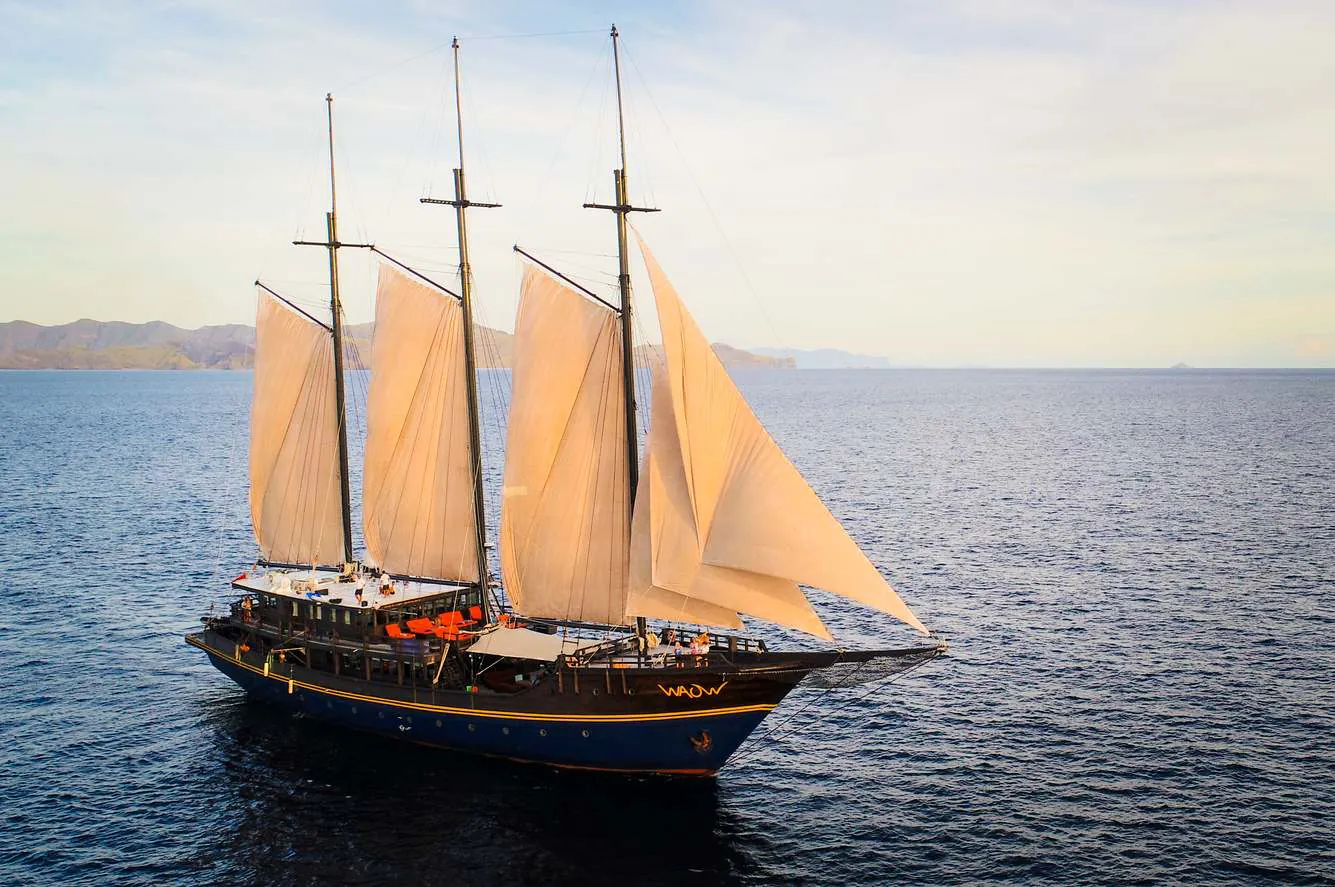
In this edition, we invite you a little closer into the WAOW 2 journey. You’ll meet Lorine through a personal portrait, and follow the latest progress from the shipyard as the structure takes shape under the Bira sun. We’ll also step back to explore the roots of this remarkable vessel, with a few insights into the traditional Indonesian phinisi, before turning to a technical focus on one of the most essential—and often unseen—stages of construction: caulking, where wood, patience, and craftsmanship come together to make a ship truly seaworthy.
Thank you for being here, and for following this journey with us.
Lorine Grandjean
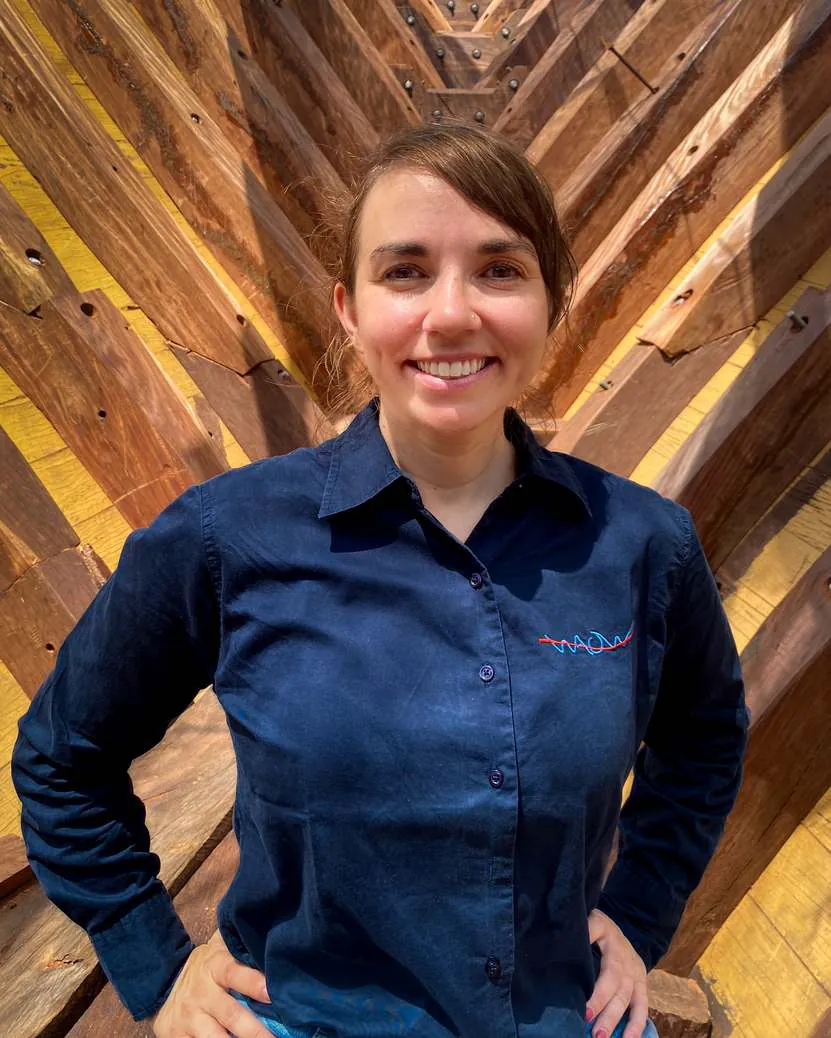
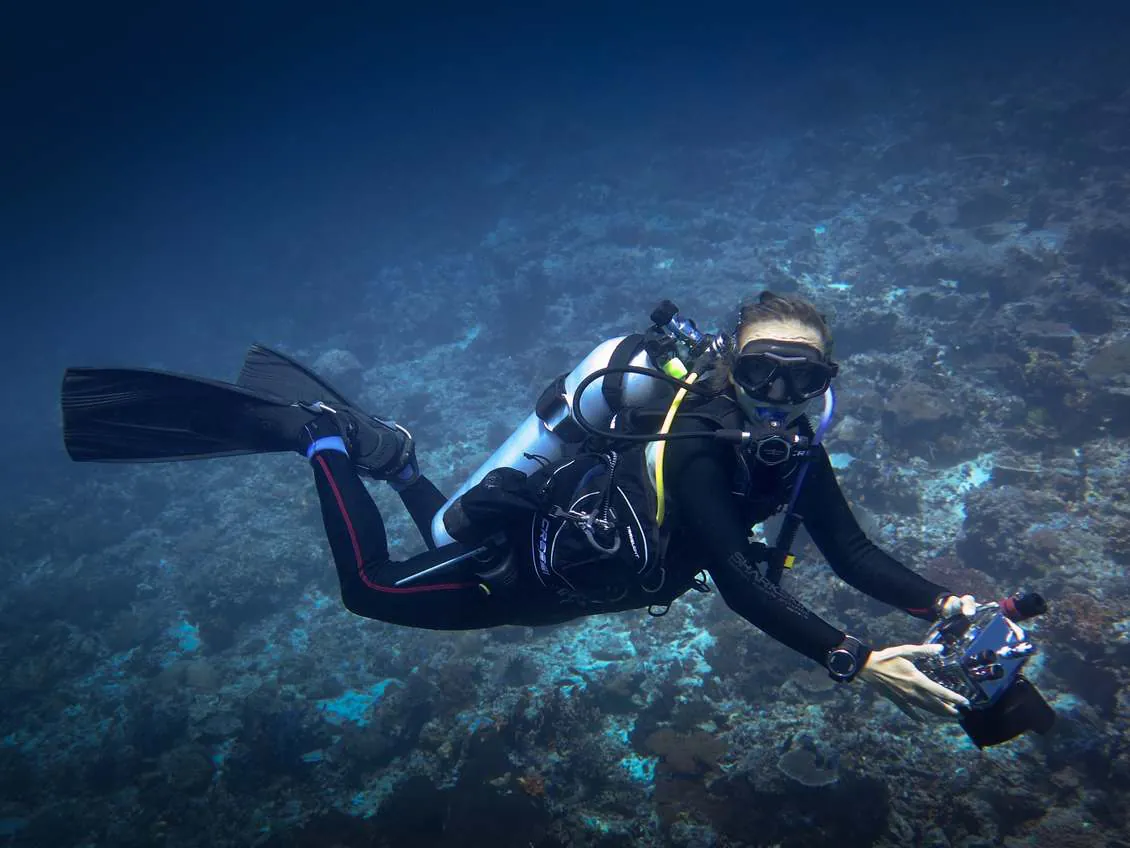
Lorine was born in Lausanne, Switzerland, far from the ocean, yet drawn to the beauty of the natural world since childhood. She discovered scuba diving in the luminous waters of the Red Sea, and one dive was enough—the silence, colours, and extraordinary wildlife of the underwater world captured her at once. Diving remains for her a moment of quiet wonder—a space of freedom and contemplation where even a brief encounter with a fish can feel like a small miracle.
Holding a Master’s degree in Film Studies, Lorine has long been fascinated by images, storytelling, and the quiet poetry of observing the world. After several years working in cultural and hospitality management, she chose to follow a different path, guided by curiosity, adventure, and a deep love of the ocean.
Having become a diving instructor in 2013, she went on to work in Thailand and the Maldives before eventually finding a home—and love—in Indonesia. For almost a decade she has led an unusual life at sea, welcoming guests from across the globe and guiding them through some of the most extraordinary marine environments on Earth.
Deeply involved in the WAOW adventure since 2016, Lorine is currently working on the development of WAOW 2, documenting the vessel’s construction while also pursuing a diploma in Ship Management in preparation for future operations. Her role spans many aspects of the project, from communication and content creation—through the website, newsletters, and social media—to administrative work, shipyard visits, and creative projects connected to life on board.
Passionate about diving, nature, and marine life, she takes great pride in offering warm, flawless five-star service on board. Curious and organised, Lorine is known for her calm presence, natural charm, and her eye for the small details that make a journey truly memorable.
For her, WAOW represents far more than a professional path: it is a meaningful life close to the ocean and the extraordinary opportunity to share its beauty and wonders with others.
Joining
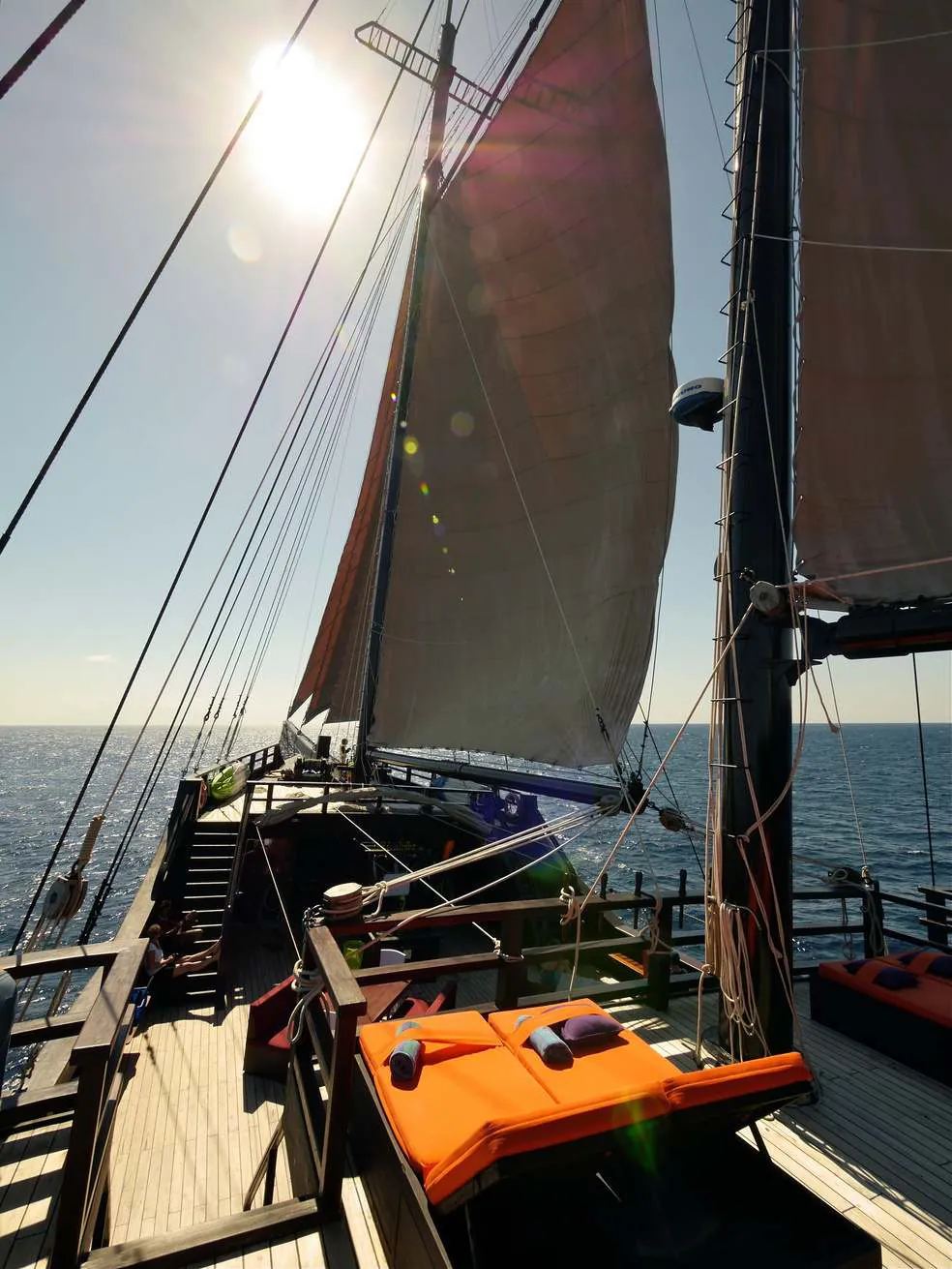
Joining our participatory pre-sale is like stepping aboard WAOW 2 before she even sets sail.
With your cruise credits, you enjoy preferential rates and priority access—but above all, you become part of the journey from the very beginning.
From her first days in the shipyard to the moment she meets the open sea, you are already on board.
Further information is available on our website or...
Contact us at info@waow.ch for all details on our participatory pre-sales and their many advantages.
Shipyard progress
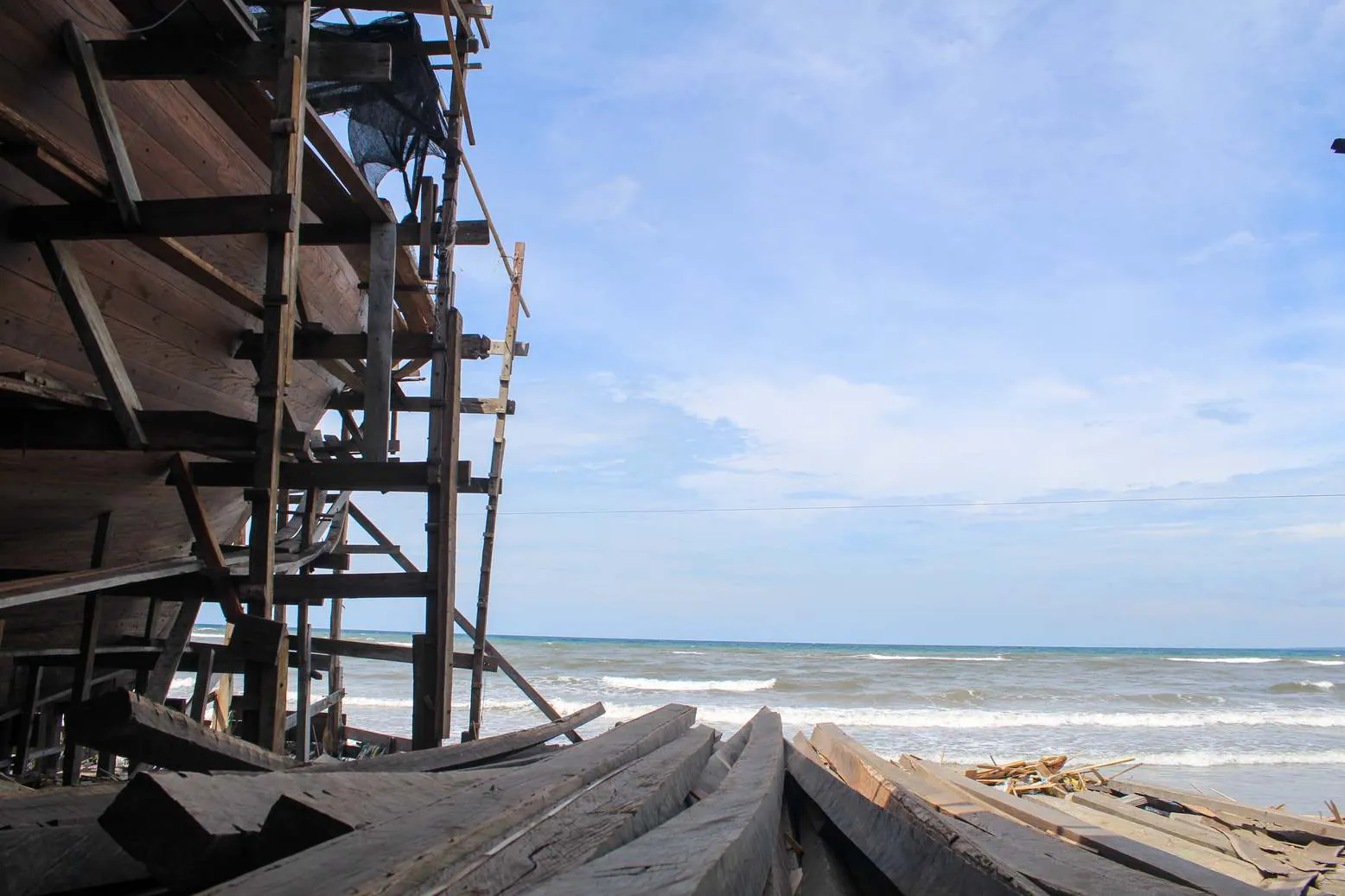
Back in the shipyard, WAOW 2 is growing more beautiful by the day. Her hull now stands strong and harmonious, with ribs, stringers, and planking all coming together to reveal her elegant, flowing lines.
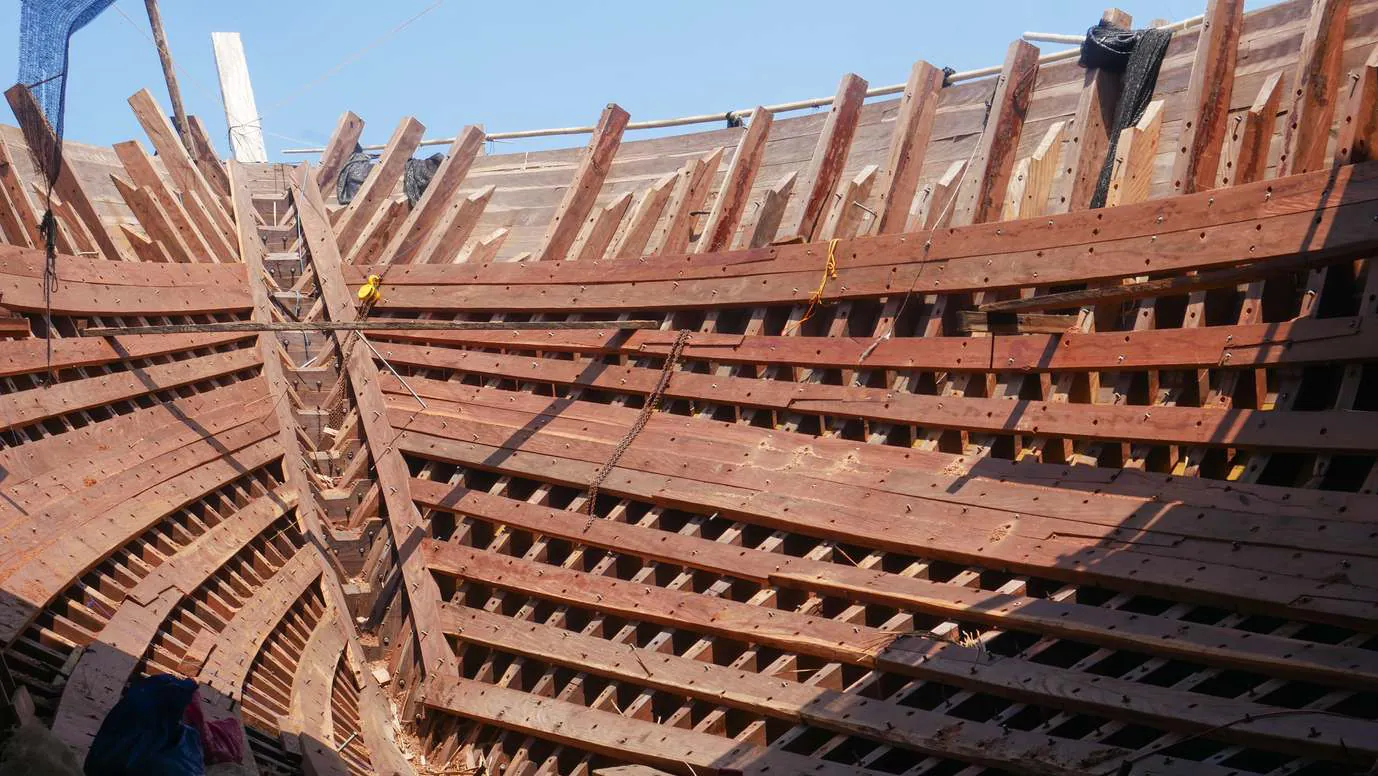
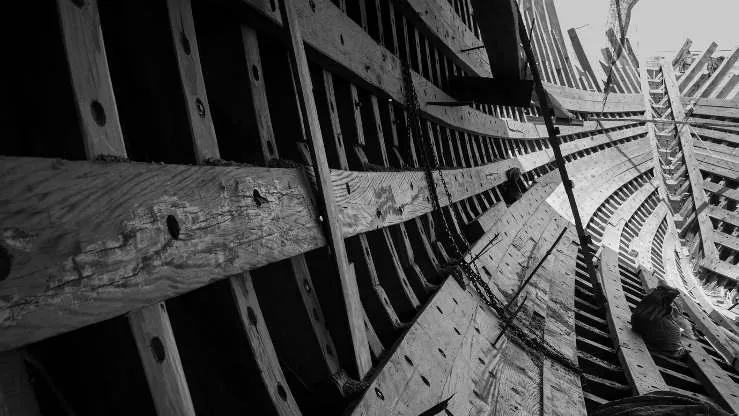
At the bow, the structure keeps rising, giving the vessel more presence and already hinting at her future silhouette at sea.
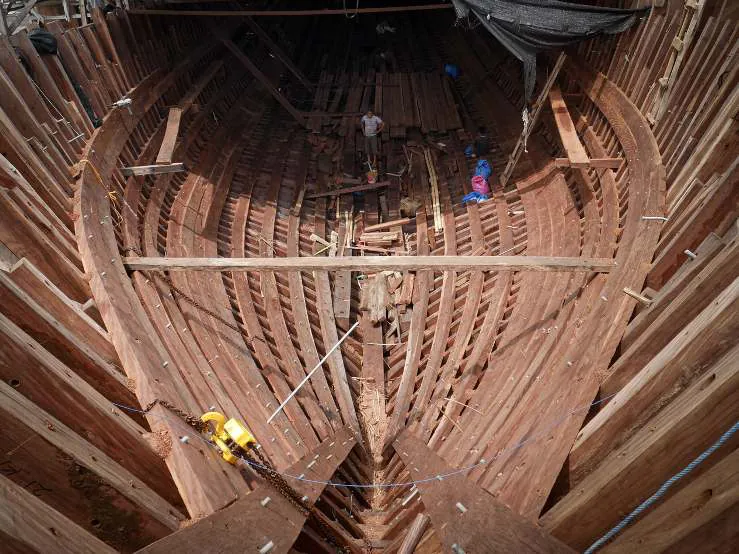
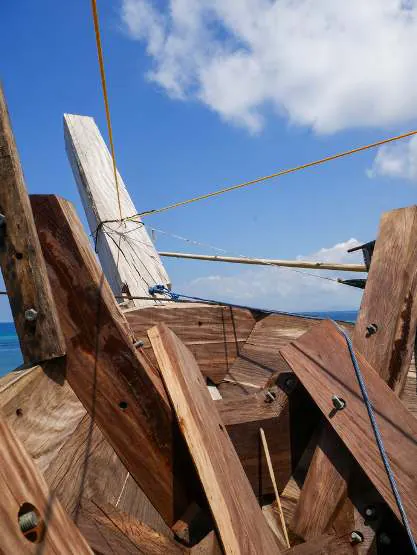
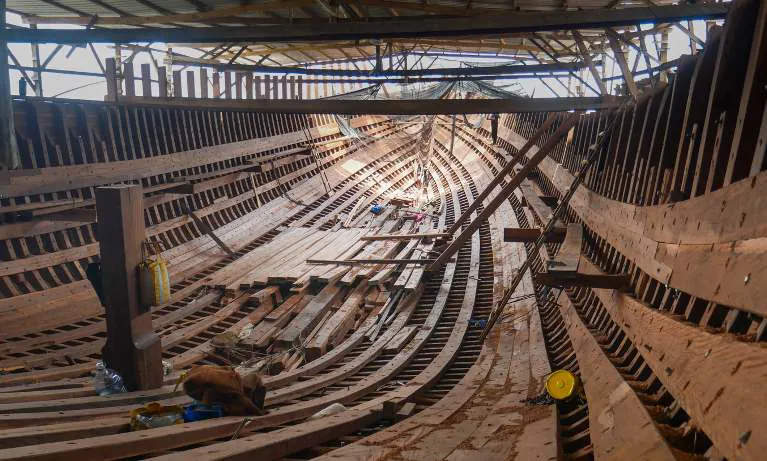
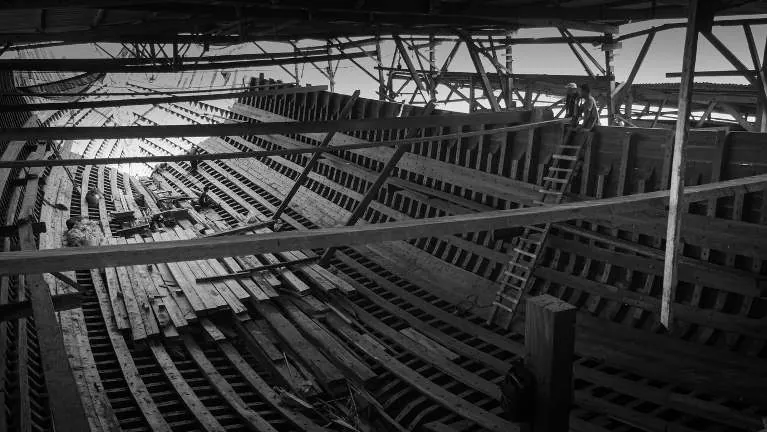
There is a wonderful energy on site — a feeling that everything is coming alive. The work is now all about precision and finesse: adjusting, aligning, perfecting each detail so that every piece fits seamlessly into the whole.
What was once a skeleton of wood has become a balanced, solid, and vibrant structure. Step by step, under the sun of Bira, WAOW 2 is truly beginning to feel like the vessel she is meant to be.
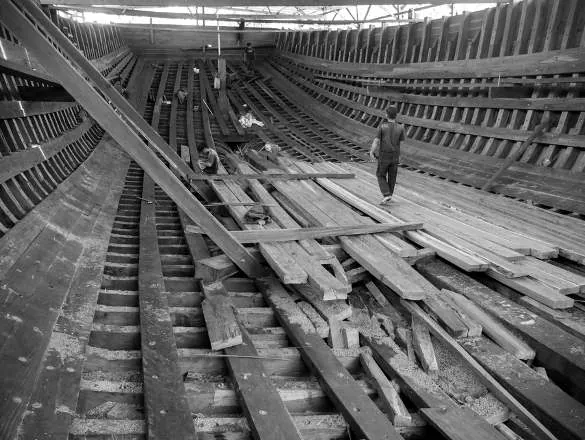
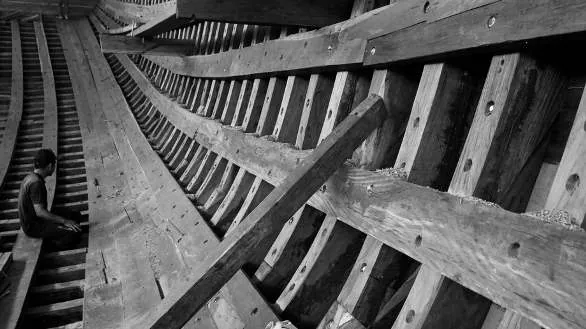
Five fascinating facts about traditional Indonesian phinisi
1. Built Without Formal Blueprints
Phinisi are not built from detailed architectural plans. Master shipbuilders rely on generations of inherited knowledge, proportions, and experience to shape the vessel. The hull form and structure are often determined by eye and tradition rather than computer design, making each boat slightly unique.
2. The Hull Comes Before the Frames
Unlike most Western shipbuilding methods where the skeleton is built first, traditional Indonesian boats often follow a “plank-first” technique. The outer hull planking is assembled early, and the frames are fitted afterward to reinforce the shape. This is one of the most distinctive aspects of Sulawesi boatbuilding.
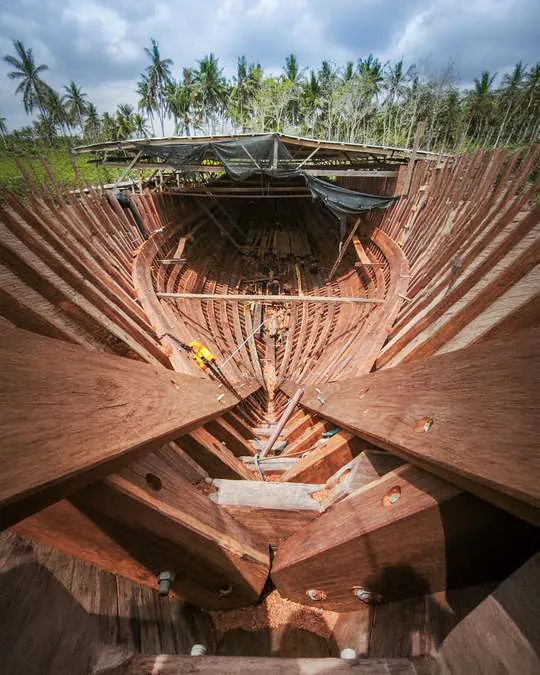
3. A Boat Is Considered “Alive”
In Bugis and Konjo maritime culture, a boat is not just an object but something almost living. Important steps in the construction—such as laying the keel—are accompanied by traditional ceremonies and offerings asking for protection and safe voyages.
4. The Name “Phinisi” Refers to the Rig, Not the Hull
Strictly speaking, “phinisi” originally refers to the two-masted sailing rig, not the hull itself. The hull design belongs to a type of traditional Indonesian vessel called “palari.” Over time, the term phinisi came to describe the entire ship.
5. Entirely Built by Hand
Most phinisi vessels are still built using simple hand tools, without heavy industrial machinery. Shipwrights shape massive hardwood beams and planks by eye and by hand, using skills passed down through generations of craftsmen in South Sulawesi.
Technical focus: caulking
Caulking is one of those quiet, essential steps that transform the initial wooden structure into a seaworthy vessel.
Once the planks are carefully fitted along the hull, fine gaps remain between each piece of wood — natural, inevitable, and necessary. These spaces must be sealed with precision, without ever forcing the material, allowing the boat to live, breathe, and move with the sea. At the shipyard, this process is carried out entirely by hand.
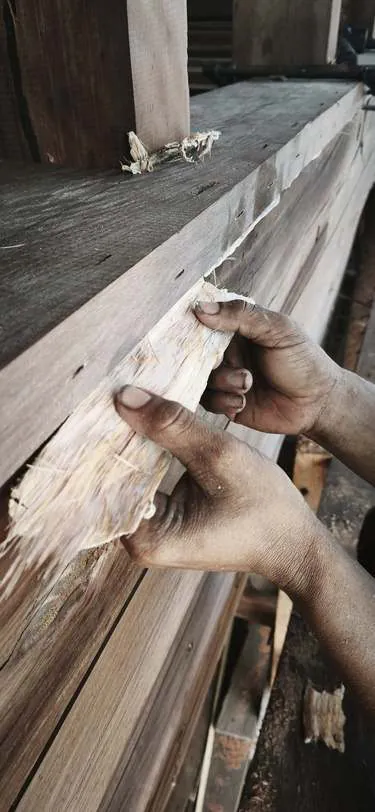
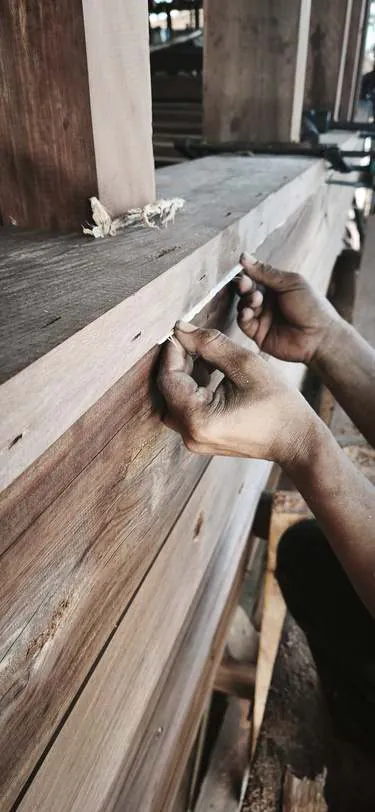
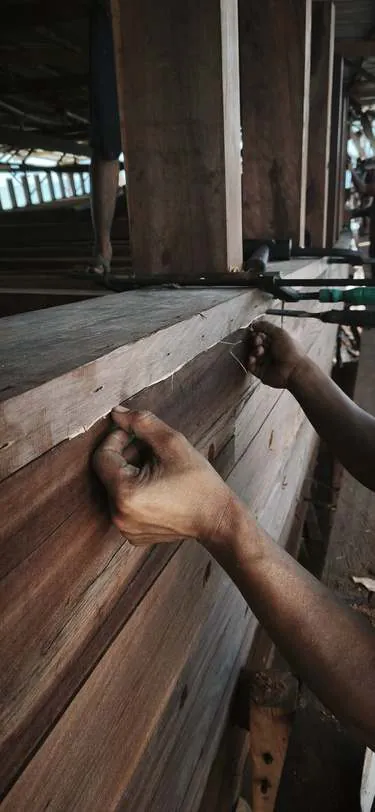
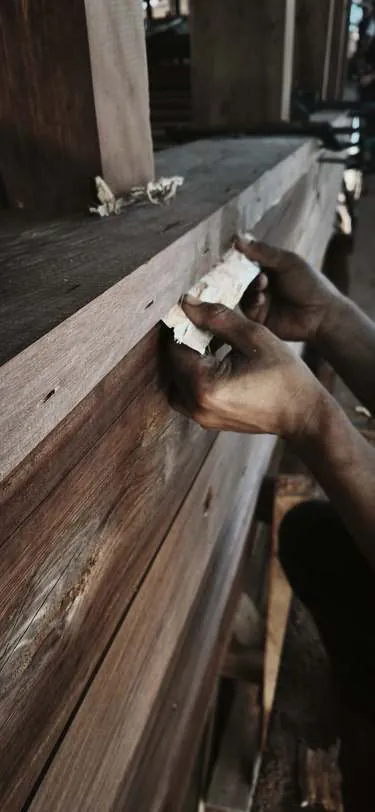
Natural fibres — made from the bark of the Gelam tree (Melaleuca cajuputi) or Cajeput — are patiently driven into each seam using a mallet and a caulking iron. The gesture is steady, controlled, almost rhythmic. Too loose, and the seal won’t hold. Too tight, and the wood could be stressed.
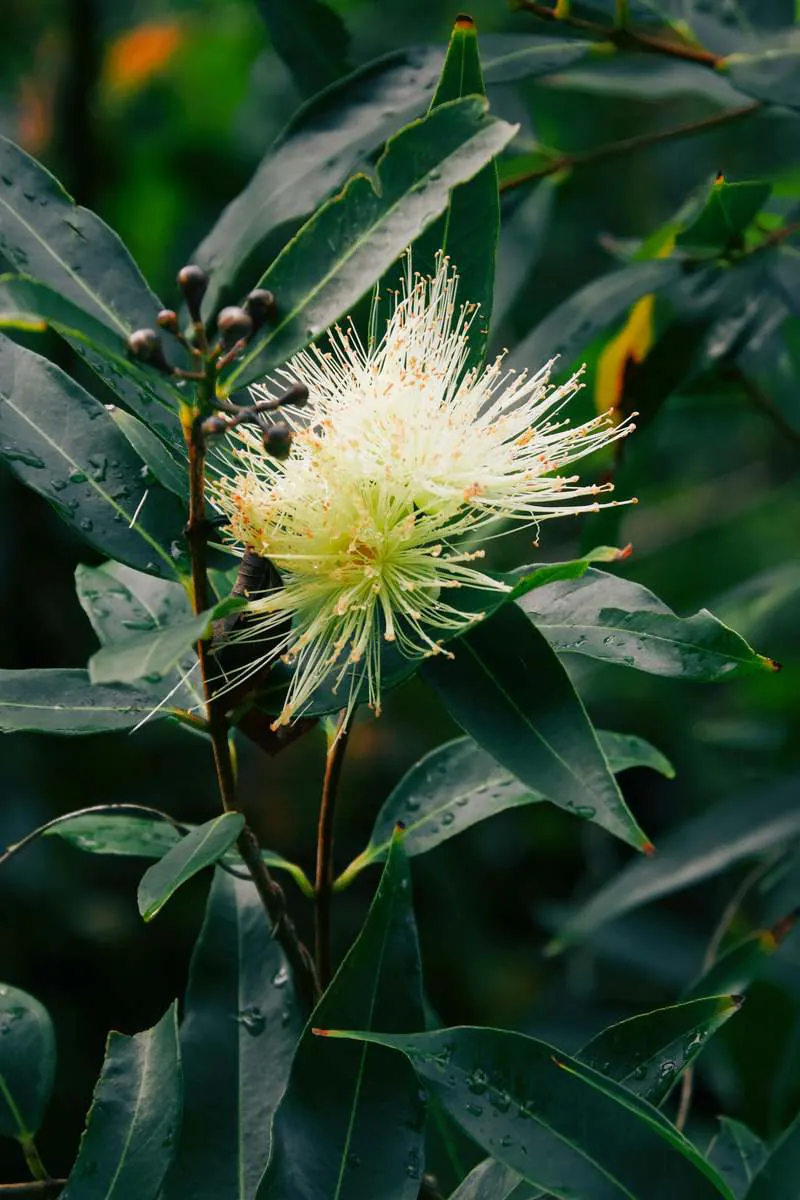
The Gelam tree, native to Southeast Asia’s wetlands, is a remarkable material in itself. With its white, papery bark and ability to thrive in flooded soils, it has long been valued for its durability in water. Traditionally used for roofing and boatbuilding, it also produces cajeput oil (minyak kayu putih) from its leaves, widely known for its medicinal properties.
Once the fibres are set, a protective compound is applied to ensure watertightness and longevity.
Layer by layer, seam by seam, the hull becomes resistant — ready to face time and ocean.
It is meticulous, repetitive work — often unseen, yet absolutely fundamental.
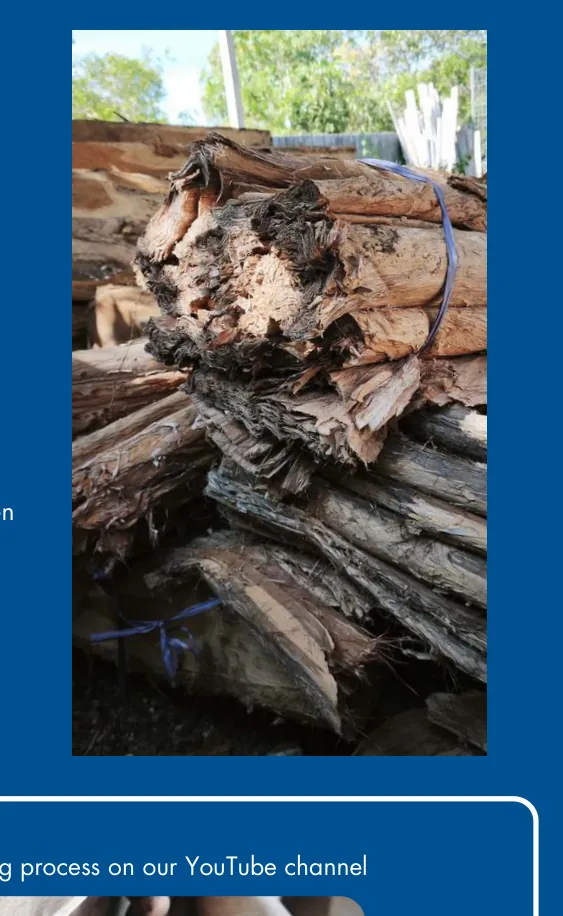
Photo credits: Julia Deville, Lorine Grandjean, Reto Schlaepfer, Paul Hallam, Thomas Desprairies